 The unusual topic of conversation seems to follow me. At business meetings, dinner parties, and coffee dates, people keep talking to me about their childhood abuse. It makes sense: my story of abuse motivates my work, and I don’t stop talking about my mission to end violence in every home {TEDTalk}. Because I share my vulnerable story, people open up to me; some tell of severe cases, others of the occasional slap or scream. It must be human nature to diffuse pain and suffering because most say that they deserved the abuse.
Let me tell you this… I did not deserve it.
I did not deserve to be beaten because the baby pooped in his diaper and smeared it on the wall. The baby was one years old and I was five. I was told to watch the baby, and I was watching the baby. Regardless, I did not deserve to be hit. Nothing a child does merits physical pain and emotional suffering – even if it’s to “teach a lesson.”
This is but one incident of parental anger and rage that was not right. My life of violence was a big deal to me as a child, but it became even bigger when it reared its ugly head after I became a mother. In my TEDxTalk , I describe how I had to fight the beast inside me for the sake of my own innocent child. I believed, and still do, that “if we do not claim our abuse, we will repeat it.” It was a big deal to my son that I never beat him. It was a big deal to me that I saved a new generation from violence.
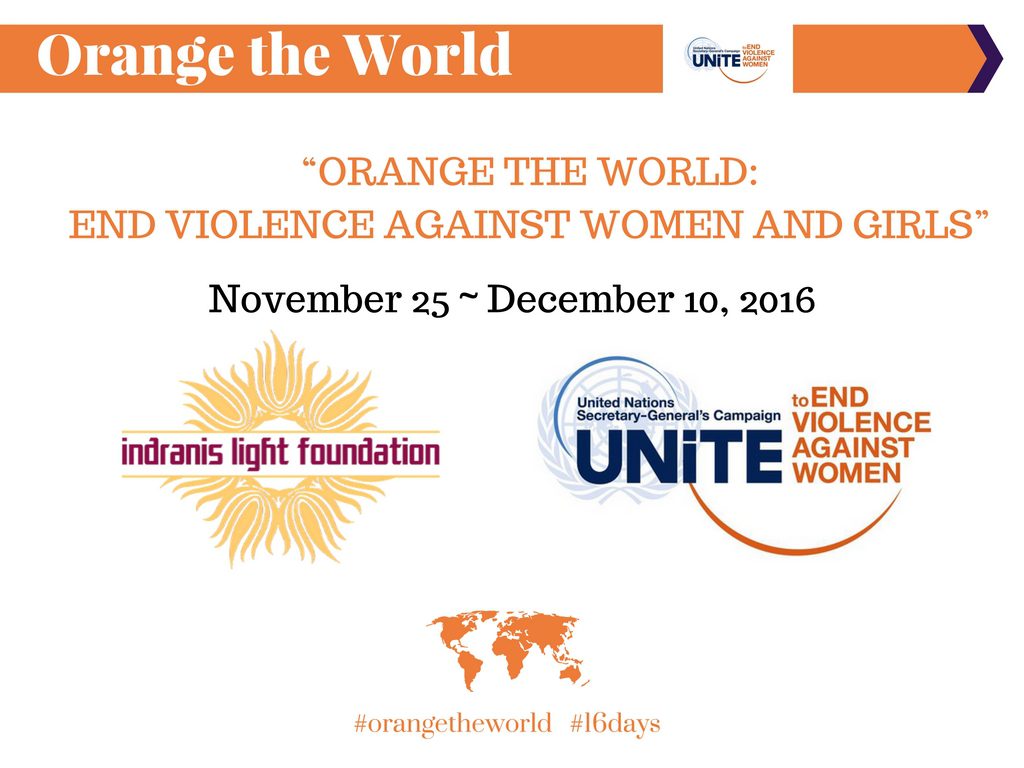
We all have a Moral Imperative to end violence in the world, the majority of which is done towards women and children. November 25 is the International Day for the Elimination of Violence against Women and we must all use our voices to make the issue of Gender-Based Violence a big deal. I will be using my voice in my home country, Trinidad, during the 16 days of Gender Activism Against Gender-Based Violence, to ensure that the issue of violence is not ignored as part of my work with Maverick Collective and Population Services International (PSI). I am Trinidadian and am proud to be. I am, however, not proud that violence is so pervasive and normalized. Many Trinidadians are of the opinion that violence is needed to “discipline.” This is not so.
There is much research that shows children who receive violence suffer not only in the present moment but also long into the future. According to the Centers of Disease Control abused children are plagued with a long list of repercussions from depression and suicides, to inability to maintain healthy intimate relationships, to becoming abusers themselves. So if childhood abuse is so common in Trinidad, no wonder 1 in 3 Trinidadians have experienced physical violence from their most recent intimate partner, according to a PSI-Caribbean study.
Reports of crimes related to sexual assault and domestic violence increased by nearly 50% between 2013 and 2014 according to the UN in the Universal Periodic Review of Trinidad and Tobago. But it doesn’t have to be this way. Abuse doesn’t have to keep happening to children. Relationships don’t have to be plagued with violence. It starts with you. Determine your Adverse Childhood Experiences Score to understand how your childhood may have affected your physical and emotional growth. If violence happened to you, it is a big deal. But you also have the power to end it, in your own home, starting today.
Let’s #orangetheworld together, because TOGETHER WE ARE MIGHTY!
With Love & Light,
Indrani Goradia | Founder
Indrani’s Light Foundation
 Another Domestic Violence Awareness Month comes to an end. Indrani’s Light Foundation, along with hundreds of other organizations around the country promoted DVAM through social media, public events, emails, fundraisers, and other creative ideas. I did some research about whether or not the month of October has been effective for domestic violence prevention organizations. The first DVAM formed in 1987, and evolved from the “Day of Unity,” which was held in 1987 by the National Coalition Against Domestic Violence.
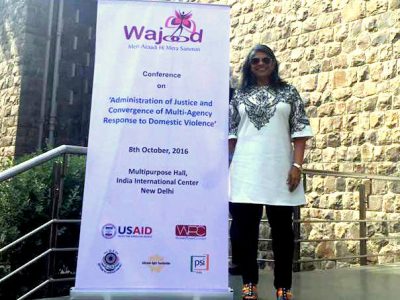 Indrani Goradia has just returned from India after continuing her global mission to end violence against women and girls. She visited a different city on this trip, and brought back some lessons from her experience there. Indrani was able to teach our Live A Brighter Life classes to groups of women and men, who did a phenomenal job in participating and learning about boundaries, saying “No,” guilt and shame, and most importantly, self-care.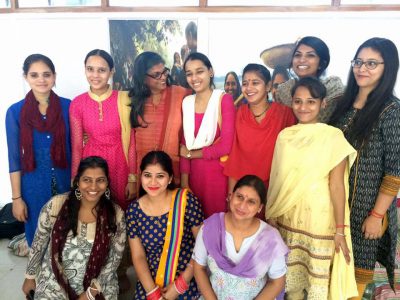
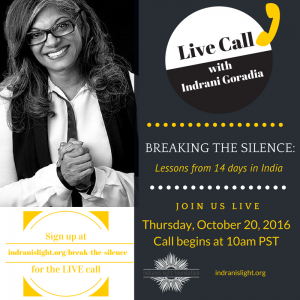 Conference Dial-In Number:
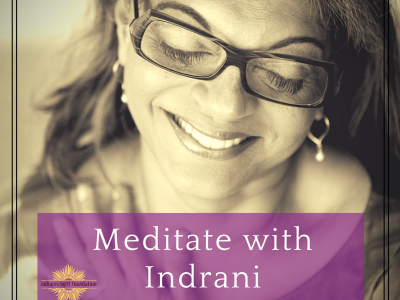 Indrani would love to share some of her meditations with you. Her desire is to assist you in beginning a meditation practice, if you do not have one. If you have a meditation practice, these weekly meditations will help you to work on living a brighter life.